Solo d'aérophone à anche libre (ding tak ta)
Item
- Archivist's Original Title
- Original description
- Recording date of the original material
- Acquisition Date
- Population
- Place of the cultural origin
- Country Name
- Recording place
- Comment
- Tags, Keywords
- Archivist Category
- Recording context
- Instrument, Original Archivist Data
- Instrument (Supplementary/Annotated Data)
- Collector
- Name of original Collection
- Collection source citation
- Related material
- History of ownership
- Holding Institution of Original Materials
- Licensing Institution
- Accessing Institutions
- Copyright Information
- Copyright Notice
- Physical format
- Original item number
- SEAH Identifier
-
fr
Solo d'aérophone à anche libre (ding tak ta)
-
en
Ding Tak Ta (Free Reed Aerophone) Solo
-
fr
Enregistrement sonore de terrain collecté chez les populations Edê (Rhade) du Viet Nam, hauts plateaux du centre, par Anne de Hauteclocque en 1961.
-
en
Field recording Music from Edê (Rhade) population, Central Viet Nam, Highlands, collected by Anne de Hauteclocque in 1961.
-
1961-09-25
-
1972
-
Rhade
-
Central Vietnam, Pok Village
-
en
According to Patrick Kersalé (see the booklet for his CD 'Vietnam: Anthology of Ede Music,' 'World Music' series, based on recordings made in 1997 and 1998 in the Ban Me Thuot region), the Ding Tak Ta is a free-reed instrument with three finger holes, measuring 45 to 50 cm in length. The pipe is inserted and sealed with wax inside a gourd, which encloses the reed attached to the bamboo tube. A small bamboo tube attached to the neck of the gourd allows air to be blown in and out, the reed functioning in both cases. The left hand covers or uncovers the holes (thumb underneath and two fingers above), while the right thumb opens and closes the lower end of the tube. This instrument is reserved for men. It was once used to wake the household in the morning. Given its loudness, it was never played inside the house. but rather in the clearings or in the forest. Today, it is played to create a lively atmosphere at parties.
-
fr
D'après Patrick Kersalé (voir le livret de son CD 'Viet Nam : Anthologie de la musique Ede, coll. 'Musique du Monde' à partir d'enregistrements réalisés en 1997 et 1998 dans la région de Ban Me Thuot), le ding tak ta est un instrument à anche libre et à trois trous de jeu, d'une longueur de 45 à 50 cm. Le tuyau est introduit et scellé à la cire à l'intérieur d'une courge emprisonnant l'anche fixée sur le tuyau de bambou. Un petit tube de bambou fixé sur la partie caudale de la calebasse permet d'insuffler et d'aspirer l'air, l'anche fonctionnant dans les deux cas. La main gauche bouche ou débouche les trous (pouce en dessous et deux doigts au-dessus) tandis que le pouce droit ferme et ouvre l'extrémité inférieure du tuyau.
Cet instrument est réservé aux hommes. Il était autrefois utilisé pour réveiller la maisonnée le matin. Compte tenu de sa puissance sonore, il n'était jamais joué dans la maison mais plutôt sur les essarts ou dans la forêt. Aujourd'hui, il est joué pour mettre de l'ambiance dans des fêtes.
-
en
Mouth organ
-
en
forest
-
en
celebration
-
en
Music (Instrumental)
-
en
Field recording
-
en
Free reed on pipe
-
Buot tak-ta
-
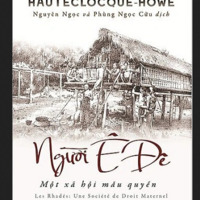
Viet Nam, Musiques des Edê sur les Hauts plateaux du Centre, Hauteclocque, 1961.
-
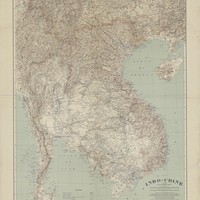
Recording archived at Musée de l'Homme by A. De Hauteclocque en 1972 (original).



-
Public Domain
-
For any use, please contact the CREM-LESC (CNRS, Nanterre University, France): crem.lesc[at]cnrs.fr ; See information at https://archives.crem-cnrs.fr
-
en
Magnetic tape
-
CNRSMH_I_1972_013_001_01
-
SEAH_CNRSMH_I_1972_013_001_01
- Item sets
- Sound archives from Viet Nam (CNRS)
- Media
 [Untitled]