Deprecated: strpos(): Passing null to parameter #1 ($haystack) of type string is deprecated in /var/www/html/themes/JaapKunstFoundation/view/omeka/site/item/show.phtml on line 27
Deprecated: strpos(): Passing null to parameter #1 ($haystack) of type string is deprecated in /var/www/html/themes/JaapKunstFoundation/view/omeka/site/item/show.phtml on line 54
Ensemble de gongs (cing)
- Archivist's Original Title
- Original description
- Recording date of the original material
- Acquisition Date
- Population
- Place of the cultural origin
- Country Name
- Recording place
- Comment
- Tags, Keywords
- Archivist Category
- Recording context
- Instrument, Original Archivist Data
- Instrument (Supplementary/Annotated Data)
- Collector
- Name of original Collection
- Collection source citation
- Related material
- History of ownership
- Holding Institution of Original Materials
- Licensing Institution
- Accessing Institutions
- Copyright Information
- Copyright Notice
- Physical format
- Original item number
- SEAH Identifier
-
fr
Ensemble de gongs (cing)
-
en
Cing Gong Ensemble, 1
-
fr
Enregistrement sonore de terrain collecté chez les populations Edê (Rhade) du Viet Nam, hauts plateaux du centre, par Anne de Hauteclocque en 1961.
-
en
Field recording Music from Edê (Rhade) population, Central Viet Nam, Highlands, collected by Anne de Hauteclocque in 1961.
-
1961-09-25
-
1972
-
Rhade
-
Central Vietnam, Pok Village
-
en
According to Patrick Kersalé (see the booklet for his CD 'Vietnam: Anthology of Ede Music'), the Ede have a true gong culture. See also Anne de Hautecloque (bibliography) on this subject. Every relatively well-off family owns one, or even several, sets of gongs. For their owner, these constitute an outward sign of wealth. Gongs are played on various occasions: celebrations, funerals, and ceremonies marking the abandonment of the grave. Within the gong set, there are two types of gongs: flat gongs (of which there are seven) and bossed gongs (three). Their playing is always accompanied by the Hgor drum. Each gong has a specific name depending on its size. FLAT GONGS The largest gong: 'Char' Group: 'Knah' Group: 'Hluê' NIPPLE-SHAPED GONGS 'Ana Cing', 'Mdu Cing', 'Mung Cing'
-
fr
D'après Patrick Kersalé (voir le livret de son CD 'Viet Nam : anthologie de la musique Ede'), les Ede ont une véritable culture des gongs. Voir aussi Anne de Hautecloque (biblio) sur ce sujet. Chaque famille relativement aisée possède un, voire plusieurs ensembles de gongs. Ceux-ci constituent, pour leur détenteur, un signe extérieur de richesse. Les gongs sont joués lors de diverses occasions : fêtes de réjouissances, décès, cérémonie d'abandon de la tombe. Au sein de l'ensemble de gongs, il existe deux formes de gongs : les gongs plats (au nombre de 7) et les gongs à mamelon (3). Leur jeu est toujours accompagné par le tambour hgor. Chaque gong porte un nom spécifique en fonction de sa taille.
LES GONGS PLATS
Le plus grand gong : 'Char'
Groupe 'knah'
Groupe 'hluê'
LES GONGS A MAMELON
'Ana cing', 'Mdu cing', 'Mung cing'
-
en
gong
-
en
drum
-
en
ensemble
-
en
Music (Instrumental)
-
en
Field recording
-
en
Gongs (in series)
-
en
Gong
-
en
Double membrane drum
-
Knah;Cing mnu;Char;Hgor
-
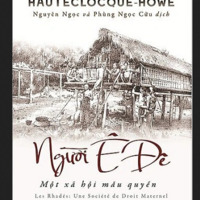
Viet Nam, Musiques des Edê sur les Hauts plateaux du Centre, Hauteclocque, 1961.
-
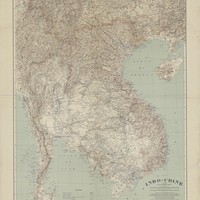
Recording archived at Musée de l'Homme by A. De Hauteclocque en 1972 (original).


-
Public Domain
-
For any use, please contact the CREM-LESC (CNRS, Nanterre University, France): crem.lesc[at]cnrs.fr ; See information at https://archives.crem-cnrs.fr
-
en
Magnetic tape
-
CNRSMH_I_1972_013_001_05
-
SEAH_CNRSMH_I_1972_013_001_05
- Item sets
- Media