Deprecated: strpos(): Passing null to parameter #1 ($haystack) of type string is deprecated in /var/www/html/themes/JaapKunstFoundation/view/omeka/site/item/show.phtml on line 27
Deprecated: strpos(): Passing null to parameter #1 ($haystack) of type string is deprecated in /var/www/html/themes/JaapKunstFoundation/view/omeka/site/item/show.phtml on line 54
Orang-Sihir (Chant pour un malade), 6
- Archivist's Original Title
- Original description
- Time duration
- Recording date of the original material
- Acquisition Date
- Population
- Place of the cultural origin
- Country Name
- Performer/Speaker
- Comment
- Tags, Keywords
- Archivist Category
- Recording context
- Instrument, Original Archivist Data
- Collector
- Name of original Collection
- Collection source citation
- History of ownership
- Holding Institution of Original Materials
- Licensing Institution
- Accessing Institutions
- Copyright Information
- Copyright Notice
- Physical format
- Preservation State of Physical Object
- Original item number
- SEAH Identifier
-
fr
Orang-Sihir (Chant pour un malade), 6
-
en
Orang-Sihir (Song for a sick man), 6
-
en
Field recordings, made by Pierre Yvanoff between 1953-1954, during an expedition in East Borneo (on the Mahakam River): shamanic ceremony during which Ubung, the medicine man, addresses incantations to the Gods in sight of the healing of a patient.
-
fr
Enregistrements sonores effectués par Pierre Ivanoff entre 1953-1954, lors d'une expédition dans l'Est de Bornéo (sur le fleuve Mahakam) : cérémonie shamanique pendant laquelle Ubung, l'homme-médecine, adresse des incantations aux Dieux en vue de la guérison d'un malade.
-
00:00:56
-
1953
-
1968
-
Dayak
-
Ubung
-
en
These medicine men are rare in Borneo. In the Méhakam region, Ubung is the only medicine man. He was initiated in the lower Méhakam by “Bugis“, who come from the island of Celebes. He only became Orang-Sihir after a long initiation. Among the Penihing, at the Baang of Nahan bohan, a man is dying. Ubung drew white dots on his body so that the allied gods would recognize him. Bells are attached to his ankles. He addresses his incantations to the Gods, either in Malay or in the Bahau dialect. The incantation imposes its rhythm on the two young girls who each beat on a gong and on the two men who beat the two small drums. Ubung will officiate all night. But the verdict will be formal: at dawn, the patient will die after his departure. It was true. (Cf. Presentation booklet of the Dayak Music collection. Borneo (Kalimantan)).
-
fr
«Ils sont rares à Bornéo ces hommes-médecine. Dans la région du Méhakam, Ubung est le seul homme-médecine. Il a été initié dans le bas-Méhakam par des «Bougis», qui viennet de l'île de Célèbes. Il n'est devenu Orang-Sihir qu'après une longue initiation. Chez les Penihing, au baang de Nahan bohan, un homme est mourant. Ubung s'est dessiné des points blancs sur le corps afin que les Dieux alliés le reconnaissent. Des grelots sont attachés à ses chevilles. Il adresse ses incantations aux Dieux, soit en malais, soit en dialecte bahau. Il impose son rythme aux deux jeunes filles qui tapent chacune sur un gong et aux deux hommes qui frappent les deux petits tambours. Il officiera toute la nuit. Mais son verdict sera formel : à l'aube, le malade mourra après son départ. C'était vrai» (Cf. Livret de présentation de la collection Musique dayak. Bornéo (Kalimantan)).
-
en
Ceremony
-
en
Shamanism
-
en
Healing
-
en
drum
-
en
gong
-
en
bell
-
en
death
-
en
ritual
-
en
Music (Vocal and instrumental)
-
en
Field recording
-
en
Singing voice: male solo
-
en
Struck drum
-
en
Gong
-
en
Bell
-
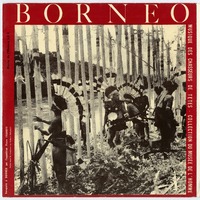
Expédition à Bornéo, Pierre Yvanoff (1953-1954)
-
Recording archived at Musée de l’Homme


-
Public Domain
-
For any use, please contact the CREM-LESC (CNRS, Nanterre University, France): crem.lesc[at]cnrs.fr ; See information at https://archives.crem-cnrs.fr
-
en
Magnetic tape
-
Magnetic tape; diameter 18cm; speed 19cm/s; Full Track, Mono
-
CNRSMH_I_1968_028_001_06
-
SEAH_CNRSMH_I_1968_028_001_06
- Item sets