Deprecated: strpos(): Passing null to parameter #1 ($haystack) of type string is deprecated in /var/www/html/themes/JaapKunstFoundation/view/omeka/site/item/show.phtml on line 27
Deprecated: strpos(): Passing null to parameter #1 ($haystack) of type string is deprecated in /var/www/html/themes/JaapKunstFoundation/view/omeka/site/item/show.phtml on line 54
Pleurer
- Edited Title
- Archivist's Original Title
- Original description
- Time duration
- MetadataURL
- Acquisition Date
- Time period
- Population
- Place of the cultural origin
- Country Name
- Recording place
- Resource Language
- Comment
- Tags, Keywords
- Archivist Category
- Recording context
- Instrument, Original Archivist Data
- Collector
- Collection source citation
- Related material
- External reference
- History of ownership
- Holding Institution of Original Materials
- Licensing Institution
- Accessing Institutions
- Copyright Information
- Copyright Notice
- Original item number
- SEAH Identifier
-
en
Sio
-
fr
Pleurer
-
en
To weep
-
fr
Les Ema, ou Kemak comme les appellent leurs voisins, sont environ 50 000 et vivent au Timor central. Traditionnellement, ils sont organisés en petites communautés autonomes, gouvernées par des chefferies. Chaque communauté est rattachée à un territoire dont les limites ont pu varier au fil du temps. Ce territoire s'organise autour d'un centre : un lieu sacré situé sur les hauteurs d'une montagne, où sont construits les villages traditionnels. Pour ceux qui ont dû migrer vers les plaines, l'appartenance à une communauté est déterminée par référence à ce centre. Les enregistrements de ce disque ont été réalisés dans la communauté de Marobo. La musique Ema est principalement vocale. Elle est interprétée lors des cérémonies qui marquent les événements importants de la vie sociale, tant individuelle que collective. Elle peut être perçue comme l'émanation d'une collectivité, exprimant et renforçant la cohésion. Il existe des chants liés aux différents événements de la vie sociale Ema. On peut distinguer deux grandes catégories, chacune présentant plusieurs caractéristiques spécifiques. Les chants de la première catégorie sont directement liés à la pratique rituelle. L'élément primordial est le contenu verbal du chant. Le chant sert avant tout à solenniser les paroles prononcées. La fonction de « maître de la parole » se transmet de père en fils, en principe sans enseignement formel. Chaque fois que le père est appelé à officier, le fils l'accompagne. S'il sait rester attentif (car les chants ont souvent lieu la nuit), il apprendra vite et pourra, le moment venu, remplir son rôle et ainsi contribuer à la survie et au bien-être de la communauté dont il est le porte-parole. Le moment où le chanteur s'apprête à entonner son récit est empreint d'émotion. Certains l'incitent à commencer, tandis que d'autres réclament le silence pour qu'il puisse se recueillir. Afin de satisfaire les attentes de l'auditoire, le récit doit se dérouler sans faute ni omission. L'auditoire manifeste son approbation en se joignant au chœur soit à la fin du récit, soit au cours de ses différents épisodes. Les chants célèbrent les exploits d'ancêtres illustres ; ils retracent le parcours de ces ancêtres avant leur installation définitive et illustrent les différents épisodes liés à cette installation. Les chants de la seconde catégorie sont moins directement intégrés au rituel. L'accent est mis sur la joie et le caractère festif de l'événement. Le contenu verbal de ces chants est pauvre : parfois, quelques syllabes sont répétées à l'infini. Ce qui compte, c'est l'harmonie, la puissance et l'intensité des voix qui proclament la joie d'être ensemble. Le chœur domine, avec quelques solos occasionnels. Ces chants se caractérisent par l'improvisation, ou du moins une certaine liberté dans le choix de la formule, et surtout par le fait qu'ils sont accompagnés de danse. Les chants funèbres tels que le sio (« pleurer ») peuvent être considérés comme une catégorie intermédiaire. Les « pleurs » sont des appels aux morts pour qu'ils reviennent et des lamentations qui célèbrent à la fois le chagrin des proches et la grandeur du défunt. Il convient de noter le caractère collectif de tous ces chants. Il n'y a pratiquement aucun chant individuel. Quelques adolescents peuvent se réunir le soir pour chanter, mais les chants semblent hors de leur contexte habituel : celui des fêtes. Il existe cependant d'autres chansons où l'émotion et les sentiments individuels transparaissent ; ces chansons sont également appelées cantiga, d'après le terme portugais.
-
en
The Ema, or Kemak as they are called by their neighbours number about 50 000 and live in Central Timor. They are traditionally divided in small autonomous communities ruled by chiefships. Each community is linked to a territory, the boundaries of which may have varied over time. A territory, however, is organized around a center: a sacred area on the upper reaches of a mountain where traditional villages are built. For those who had to migrate to the plains, membership to a community is determined by reference to such a center. The recordings of this disk were made in the Marobo community.
Ema music is mostly vocal. It is performed at the ceremonies which mark events in the social life of the individual and of the group. It can be seen as the emanation of a collectivity, expressing and strengthening cohesion.
There are songs linked to the various events of Ema social life. Two broads categories, each with several specific features, can be distinguished.
The songs in the first category are directly related to ritual performance. What matters most is the verbal content of the song. Singing serves primarily to solemnize what is being said. The office of “master of the word” is transmitted from father to son with, in principle, no formal teaching. Every time the father is called upon to officiate, the son goes along. If he knows how to “keep his eyes open” (since singing often takes place at night), he will learn quickly so as to be able, when the time comes, to fulfil his role and thereby to contribute to the survival and welfare of the community for which he acts as spokesman.
The moment when the singer is preparing to intone his narrative is not without emotion. Some urge him to start while others call for silence so that he may “remember.” In order to meet the expectations of the audience, the narrative must proceed without fault or omission. The audience shows its assent by joining the chorus either at the end of the narrative or in the course of its various episodes. The songs extol the deeds of famous ancestors; they “unfold the path” followed by these ancestors before they finally settled, and illustrate the various episodes involved in this settlement.
The songs in the second category are less directly integrated into ritual. Emphasis is placed on rejoicing and on the festive nature of the event. The verbal content of these songs is poor: sometimes a few syllables are endlessly repeated. What matters is the harmony, power, and intensity of the voices proclaiming the joy of being together. The chorus dominates, with occasional solos. These songs are characterized by improvisation, or at least some degree of freedom in the choice of formula, and above all by the fact that they are accompanied by dancing.
Dirges such as sio (“to weep”) may be seen as an intermediate category. “Weepings” are appeals to the dead to come back and laments extolling both the grief of those left behind and the greatness of the departed.
The collective nature of all these songs is to be noted. There are virtually no songs to be sung individually. A few adolescents may get together in the evening to sing, but the songs seem to be out of their usual context: that of festivals. There are, however, other songs in which emotion and individual feelings break through; these songs are also called cantiga after the Portuguese term.
-
en
00:04:05
-
en
1979
-
en
1966/1970
-
en
Ema/Kemak
-
en
Central Timor, Marobo Community
-
en
Ema/Kemak
-
en
The dead are “wept over” twice: the first time at the moment of death, the second during the great funeral ceremony that marks the definitive separation from the living. The ceremony is celebrated for all those who have died since the preceding ceremony, but in general the ritual particularly honors the dead person with the highest social status; the other dead “follow.”
The corpses, formerly kept in the house, would slowly dry out in the heat of the hearth. Nowadays they are immediately buried, and pieces of cloth are used to represent them at funeral ceremonies, which may take place several months or even several years after death. The funeral wake begins with a meal offered to the dead. Then a man or a woman utters a kind of cry invoking “the cherished mother, the cherished father” from whom they will be separated, and those present join in a chorus.
-
fr
On pleure les morts à deux reprises : une première fois au moment du décès, une seconde fois lors des grandes funérailles qui marquent la séparation définitive d’avec les vivants. Cette cérémonie est célébrée pour tous ceux qui sont décédés depuis la fête de funérailles précédente, mais en général, le rituel honore tout particulièrement le défunt de plus haut rang social ; les autres morts « suivent ». Autrefois conservés dans la maison, les corps se desséchaient lentement à la chaleur du foyer. De nos jours, ils sont enterrés immédiatement, et des morceaux de tissu servent à les représenter lors des funérailles, qui peuvent avoir lieu plusieurs mois, voire plusieurs années après le décès. La veillée funèbre commence par un repas offert au défunt. Puis, un homme ou une femme pousse une sorte de cri invoquant « la mère chérie, le père chéri » dont ils seront séparés, et les personnes présentes se joignent à lui en chœur.
-
en
Festival
-
en
Death
-
en
Ritual
-
en
Music (Vocal)
-
en
Published record
-
en
Male voice|Children chorus
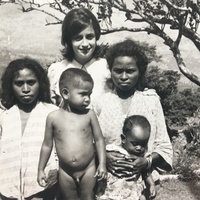
-
en
Timor - Song of Ema, B. Clamagirand, Edition CNRS Musée de l'Homme, Chant du Monde, Paris, 1979. https://archives.crem-cnrs.fr/archives/collections/CNRSMH_E_1979_004_003/
-
en
Record published by CNRS-MNHN-Chant du Monde and archived at Musée de l’Homme in 1979.

-
en
In Copyright
-
en
For any use, please contact the CREM-LESC (CNRS, Nanterre University, France): crem.lesc[at]cnrs.fr ; See information at https://archives.crem-cnrs.fr
-
en
CNRSMH_E_1979_004_003_001_11
-
en
SEAH_CNRSMH_E_1979_004_003_001_11