
Deprecated: strpos(): Passing null to parameter #1 ($haystack) of type string is deprecated in /var/www/html/themes/JaapKunstFoundation/view/omeka/site/item/show.phtml on line 27
Deprecated: strpos(): Passing null to parameter #1 ($haystack) of type string is deprecated in /var/www/html/themes/JaapKunstFoundation/view/omeka/site/item/show.phtml on line 54
Tnabar Ilaa
- Edited Title
- Archivist's Original Title
- Original description
- Time duration
- Recording date of the original material
- Acquisition Date
- Population
- Place of the cultural origin
- Country Name
- Recording place
- Resource Language
- Comment
- Tags, Keywords
- Archivist Category
- Recording context
- Instrument, Original Archivist Data
- Instrument (Supplementary/Annotated Data)
- Collector
- Collection source citation
- Related material
- History of ownership
- Holding Institution of Original Materials
- Licensing Institution
- Accessing Institutions
- Copyright Information
- Copyright Notice
- Physical format
- Preservation State of Physical Object
- Original item number
- SEAH Identifier
-
en
Tnabar Ilaa
-
en
Tnabar Ilaa
-
fr
Chant “Tnabar Ilaa“
-
id
Lagu “Tnabar Ilaa”
-
en
Field recordings of vocal music and soundscapes, made in the South Moluccas (Maluku) in East-Indonesia, in 1993, by Joséphine Simonnot and Pierre Dechamps.
-
fr
Enregistrements sonores inédits de musiques vocales et ambiances, enregistrées aux Moluques (Maluku) en Indonésie, en 1993, par Joséphine Simonnot et Pierre Dechamps.
-
id
Rekaman lapangan musik vokal dan lanskap suara, yang dibuat di Maluku Selatan di Indonesia Timur, pada tahun 1993, oleh Joséphine Simonnot dan Pierre Dechamps.
-
en
00:24:42
-
en
1993-07-22
-
en
2011
-
en
Maluku
-
en
Tanimbar, Fordata Island, Awear
-
en
Fordata
-
en
During a meeting of villages, the nobles of the 2 villages sit in the middle of the Tnabr, eat Siri and drink Sopi. For the Tnabar Ilaa, a man from the Rumlaan family (Rumah Mata) plants the VUNUT LAI SANA. When he plants the spear in the ground, the dance can begin on the place of Tnabar: DIDALAN. The women follow him from the beach to the village and start dancing. The VANUT belongs to the village. Repeated 3 times.
Crashed coconut shells.
-
fr
Lors d'une rencontre de villages, les nobles des 2 villages s'assoient au milieu du Tnabr, mangent le siri et boivent le sopi. Pour le Tnabar Ilaa, un homme de la famille Rumlaan (Rumah Mata) plante le VUNUT LAI SANA. Quand il plante la lance dans la terre, la danse peut commencer sur le lieu du Tnabar: DIDALAN. Les femmes le suivent, de la plage vers le village et commencent à danser. Le VANUT appartient au village.. Repris 3 fois.
Coques de noix de coco entrechoquées.
-
en
Tnabar
-
en
royal
-
en
eating
-
en
drinking
-
en
Dance
-
en
spear
-
en
Music (Vocal and instrumental)
-
en
Field recording
-
en
Singing voice: chorus
-
en
Struck drum
-
en
Idiophone (clashed coconuts)
-
en
Tipa
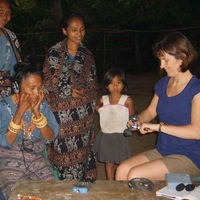
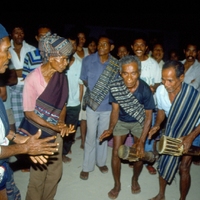
-
en
http://archives.crem-cnrs.fr/archives/collections/5332/
-
en
Archived at Musée de l'Homme in 2011 by J. Simonnot



-
In Copyright. Non-Commercial Use Permitted
-
For any use, please contact the CREM-LESC (CNRS, Nanterre University, France): crem.lesc[at]cnrs.fr, see information at https://archives.crem-cnrs.fr
-
en
Digital Audio Tape
-
en
original
-
en
CNRSMH_I_2011_001_003_14
-
en
SEAH_CNRSMH_I_2011_001_003_14
- Media
Linked resources
1–1 of 1
| Title | Class |
|---|---|
 Song "Tnabar Ilaa" Song "Tnabar Ilaa" |
AudioObject |