Deprecated: strpos(): Passing null to parameter #1 ($haystack) of type string is deprecated in /var/www/html/themes/BBCFoundation/view/omeka/site/item/show.phtml on line 31
Deprecated: strpos(): Passing null to parameter #1 ($haystack) of type string is deprecated in /var/www/html/themes/BBCFoundation/view/omeka/site/item/show.phtml on line 45
Declamations Between Singing and Shouting
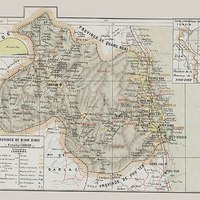
Sound recordings on the traditional sung theater of the province of Bình Định in Viet Nam collected by Phạm Duy in 1960.
- Edited Title
- Archivist's Original Title
- Original description
- Recording date of the original material
- Acquisition Date
- Population
- Place of the cultural origin
- Country Name
- Recording place
- Comment
- Tags, Keywords
- Archivist Category
- Recording context
- Instrument, Original Archivist Data
- Instrument (Supplementary/Annotated Data)
- Collector
- Name of original Collection
- Collection source citation
- History of ownership
- Holding Institution of Original Materials
- Licensing Institution
- Accessing Institutions
- Copyright Information
- Copyright Notice
- Physical format
- Original item number
- SEAH Identifier
-
BACH, NOI LOI, XUONG
-
en
Declamations Between Singing and Shouting
-
fr
Déclamations entre le chanté et le crié
-
en
Sound recordings on the traditional sung theater of the province of Bình Định in Viet Nam collected by Phạm Duy in 1960.
-
fr
Enregistrement de théâtre chanté traditionnel de la province de Bình Định au Viet Nam collecté par Phạm Duy en 1960.
-
1960-07-28
-
1962
-
en
Viet
-
Centre Vietnam, Binh Dinh
-
fr
Scène tirée de la pièce de TAM QUOC CHI (les trois royaumes). BACH est le récitatif chanté par un personnage militaire, un génie ou un moine avant la déclamation. XUONG est le récitatif propre au militaire ou au moine avant la déclamation du théâtre noi lôi. NOI LOI est la déclamation proprement dite. Xuong est le récitatif propre au militaire ou au moine bouddhique. Ici, après le Bach et le Noi lôi, il y a un récitatif qui ressemble beaucoup à un “than“, suivi d'un “Hat khach“, chant chinois. Ces récitatifs et déclamations sont interprétés par MM. XA DAI, TAM THANH et CUU VI d'après les notes de Pham Duy, ou Xâu, Tam, et Nông d'après l'annonce sur la bande.
Fin de bande, pièce interrompue
-
en
Scene from the play “Tam Quoc Chi (The Three Kingdoms).“ “Bach“ is the recitative sung by a military character, a genie, or a monk before the declamation. “Xuong“ is the recitative specific to the military or Buddhist monk before the declamation in Noi Lôi theater. “NoiI Loi“ is the declamation itself. Here, after the Bach and the Noi Lôi, there is a recitative that closely resembles a “Than,” followed by a “Hat Khach,” a Chinese song. These recitatives and declamations are performed by Messrs. Xa Dai, Tam Thanh, and Cuu Vi according to the notes of Pham Duy, or Xâu, Tam, and Nông according to the announcement on the tape.
End of tape, piece interrupted.
-
en
Theater
-
en
drum
-
en
gong
-
en
woodblock
-
en
violin
-
en
fiddle
-
en
performance
-
en
military
-
en
genie
-
en
monk
-
en
Music (Vocal and instrumental)
-
en
Performance
-
en
Singing Voice: male trio
-
en
drum
-
en
gong
-
en
woodblock
-
en
violin
-
Trong;Chieng;Mo;Dan co;Dan gao

-
Viet Nam, Théâtre chanté de la province de Bình Định, Phạm Duy, 1960.
-
Recording archived by Pham Duy at Musée de l'Homme, Paris, in 1962.



-
Public Domain
-
For any use, please contact the CREM-LESC (CNRS, Nanterre University, France): crem.lesc[at]cnrs.fr ; See information at https://archives.crem-cnrs.fr
-
en
Magnetic tape
-
CNRSMH_I_1962_003_001_20
-
SEAH_CNRSMH_I_1962_003_001_20
- Item sets
- Media