Taba' Popo', Gong Ensemble, Funerary Rhythm (Bumbulan 1st night)
Item
- Archivist's Original Title
- Original description
- Time duration
- Recording date of the original material
- Acquisition Date
- Population
- Place of the cultural origin
- Country Name
- Recording place
- Resource Language
- Comment
- Tags, Keywords
- Archivist Category
- Recording context
- Instrument, Original Archivist Data
- Collector
- Name of original Collection
- Collection source citation
- Related material
- External reference
- History of ownership
- Holding Institution of Original Materials
- Licensing Institution
- Accessing Institutions
- Copyright Information
- Copyright Notice
- Physical format
- Preservation State of Physical Object
- Original item number
- SEAH Identifier
-
en
Taba' Popo', Gong Ensemble, Funerary Rhythm (Bumbulan 1st night)
-
fr
Taba' Popo', ensemble de gongs, rythmique funéraire (Bumbulan 1ère nuit)
-
id
Taba' Popo', rangkaian gong, irama pemakaman (Bumbulan malam ke-1)
-
en
Field recordings made in West Kalimantan, Indonesia, in 1997 by D. Rappoport :Dayak, Iban, Kayan populations.
-
fr
Enregistrements sonores inédits réalisés en Indonésie (West Kalimantan) en 1997 par Dana Rappoport, auprès des populations Dayak Taman, Iban, Kayan Mendalam.
-
id
Rekaman dibuat di Indonesia (Kalimantan Barat) pada tahun 1997 oleh Dana Rappoport, dalam masyarakat Mendalam Dayak Taman, Iban, Kayan.
-
en
00:13:13
-
en
1997-08-07
-
en
2011
-
en
Dayak Taman
-
en
Kampung Lunsa Hilir, kecamatan Putussibau, kabupaten Kapuas ulu, Kalimantan
-
en
Taman
-
en
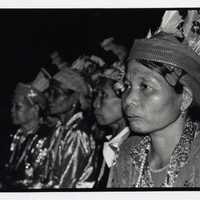
1st day of a six-day ritual (Gawai Mamandung ritual). This day is called Bumbulan. 8:30 p.m., in the longhouse. Funeral rhythm in three beats, also called Taba' Kolak Kolak or Kokolak. Composition: Kangkuang, Tuung, Babandi, 4 gong Garantung. This is the rhythm of the Gawai to repeat the funeral rhythm. Because the deceased had performed the Gawai ritual while living, this rhythm could be performed for him. Kolak Kolak comes from the sound of the rooster. Kangkuang+Tuung+ Babandi = in unison, one strike. the Garantung is struck three times.
-
fr
1er jour d'un rituel de six jours (rituel gawai mamandung). Ce jour est appelé bumbulan. 20h30, dans la longue maisonRythmique funéraire à trois temps, appelée aussi taba' kolak kolak ou kokolak. Composition: kangkuang, tuung, babandi, 4 gong garantung. C'est le rythme du Gawai pour répéter la frappe funéraire. Parce qu'il a déjà fait un Gawai, on lui joue ce rythme là. Kolak kolak vient du bruit du coq.
Kangkuang+tuung+ babandi = à l'unisson, une seule frappe, le garantung frappe trois coups
-
id
Hari pertama dari ritual enam hari (ritual Gawai Mamandung). Hari ini disebut Bumbulan. Pukul 20:30, di rumah panjang.Irama pemakaman dalam tiga ketukan, disebut juga taba' kolak kolak atau kokolak. Dengan: kangkuang, tuung, babandi, 4 gong garantung. Inilah ritme Gawai yang mengulangi aksi mogok pemakaman. Karena dia sudah melakukan Gawai, kami memainkan ritme ini untuknya. Kolak kolak berasal dari suara ayam jago.
Kangkuang+tuung+ babandi = serempak, satu pukulan, garantung memukul tiga pukulan
-
en
Funeral
-
en
ritual
-
en
cow
-
en
offering
-
en
gong
-
en
construction
-
en
Music (Vocal)
-
en
Field recording
-
en
Kangkuang
-
en
Tuung
-
en
Babandi
-
en
4 gong Garantung

-
en
Indonesia: West Kalimantan, 1997, D. Rappoport
-
en
RappoportPercussions des Taman, in revue Percussions, n° 59, vol IX/5, 1998.
-
en
Archived at CREM, CNRS in 2011 by D. Rappoport



-
In Copyright. Non-Commercial Use Permitted
-
For any use, please contact the CREM-LESC (CNRS, Nanterre University, France): crem.lesc[at]cnrs.fr ; See information at https://archives.crem-cnrs.fr
-
en
Digital Audio Tape
-
en
original
-
en
CNRSMH_I_2011_016_002_18
-
en
SEAH_CNRSMH_I_2011_016_002_18
- Media
 CNRSMH_I_2011_016_002_18